

Why sales complains about marketing leads and how to close the loop
“These leads are bad” is the symptom of an open loop between the two teams. Here is how to close it with a shared qualified lead definition, feedback from sales and a monthly ritual.

October 1 is Salesperson's Day in Brazil, a good day to face the line every marketing team has heard from sales: “these leads are bad”. Behind it there is usually an open loop between the two teams. Nobody wrote down what a qualified lead is, sales doesn't report back on what happened to each contact and, without that feedback, paid media optimizes for volume. Sales and marketing alignment starts when that loop closes, with a shared definition, feedback that turns into data and a monthly conversation with a fixed agenda.
Signs the loop is open
The loop is open when each team measures leads with a different ruler and nobody checks the other team's ruler. The signs show up before the complaint does:
- marketing celebrates the month's volume and sales can't say how many became meetings;
- every rep has their own idea of a good lead, and it shifts with the month's quota;
- discarded leads disappear from the CRM with no reason recorded;
- paid media is judged on cost per lead, with no look at what happened after the form;
- feedback from sales arrives as a loose message, if it arrives at all.
If three or more of these describe your operation, the complaint is fair, and the cause sits in the handoff between the teams. Start by mapping where your leads leak between the form and the first call.
Qualified lead: one definition both teams sign
A qualified lead combines fit and interest, and the definition lives somewhere marketing and sales both check. Fit is who the person is: role, company size and industry, the region you serve. Interest is what they did: asked for a demo, came back to the pricing page, downloaded a bottom-of-funnel resource.
The table separates the stages the market calls MQL and SQL:
| Stage | Fit | Interest | Who acts |
|---|---|---|---|
| Lead | still incomplete | downloaded a resource or joined the email list | marketing, with content and nurturing |
| MQL (marketing qualified) | inside the ideal customer profile | repeated signs of interest | marketing hands over to sales |
| SQL (sales qualified) | confirmed on the first call | has a problem the company solves and a timeline | sales takes over |
The move from MQL to SQL is where most arguments happen. A fit and interest score takes guesswork out of that decision, and the rule fits inside your automation tool, as we show in our walkthrough of lead scoring in RD Station.
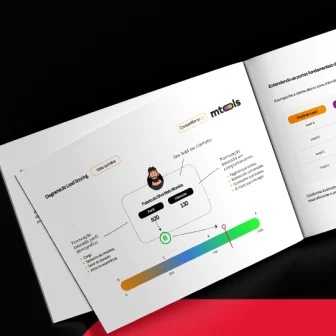 Support material · Guide in PortugueseLead scoring guide for RD StationIdentify and prioritize the leads with the most potential and stop spending time on contacts that won't convert.Download the guide
Sales feedback is data for paid media
Without knowing which leads became opportunities, paid media optimizes blind and chases more form fills. The algorithm learns from the signal it gets and, if that signal is a form submission, it looks for more submissions, including from people who will never buy.
We saw this up close at an edtech company we work with. The pre-sales team's feedback on leads was passed along by hand, in loose comments, and the media team had no view of what turned into a sale. Without data, every conversation about audiences and creatives became opinion against opinion.
Three changes turn sales feedback into data:
- Closed-list statuses in the CRM. Qualified, opportunity, won and discarded, with no free text.
- Lead source all the way down the funnel. Standardized UTMs and hidden form fields carry the source campaign into the CRM.
- The outcome back to the ad platform. Google Ads supports offline conversion imports, which tell the ad that a given click became an opportunity or a sale. With that signal, bidding looks for leads similar to the ones sales actually uses.
Loss reasons: what the CRM already knows
The loss reasons recorded in the CRM show marketing what buyers still don't understand, and that list becomes a content plan. Every lost deal with a reason attached is a real objection, and the count shows which ones weigh the most.
A tech client of ours took that list into content planning. There were five reasons:
- the prospect asked to pick the conversation up later;
- the product didn't meet a technical requirement;
- sales took too long to respond;
- the price came in above expectations;
- the proposal was only there to compare quotes.
In their team's reading, price was the reason with the most to talk about: quality, support and time in the market all belong in that conversation, with more emails than any other theme. Quote comparison went to the brand campaign, and “let's pick this up later” went into the funnel's content matrix. Slow response is something sales fixes on its side.
This is the work we do in email marketing and automation: turning CRM objections into nurturing flows. The same reasons feed bottom-of-funnel content for your site and social channels.
 Talk to usWant help planning this at your company?Tell us what you need. We'll reply by email or WhatsApp and, if it makes sense, put together a quote.Contact us
A monthly sales and marketing alignment ritual
One meeting a month, with the same agenda and the same numbers, keeps the loop closed. Without a ritual, the topic only comes back when the quota gets tight, and then the conversation starts with blame.
An agenda that fits in one hour:
- The month's numbers on one screen. Leads, MQLs, SQLs, opportunities and deals, by source campaign.
- Good and bad leads. Sales brings three examples of each and explains why.
- Loss reasons. What came up most and what changed since last month.
- The qualified lead definition. Does it still describe who buys?
- Decisions with an owner and a deadline. What media changes, what content produces and what sales adjusts.
Tests on the conversion page go into the same log as your landing page review sprints, so the learning doesn't get lost. The next month, the meeting opens by checking last month's decisions.
Frequently asked questions
Who should lead sales and marketing alignment?
Whoever is being held accountable for results, marketing or sales. The agreement only works with both leaders in the room and the qualified lead definition written together.
What's the difference between an MQL and an SQL?
An MQL is a lead marketing considers ready for a conversation, based on fit and interest. An SQL is a lead sales confirmed on the first call: it has the problem, the fit and a timeline to solve it.
What if sales doesn't fill in the CRM?
Cut the effort, with statuses and loss reasons in closed lists and few required fields. In the monthly meeting, show what changed in paid media because of what was filled in.