

Marketing planning 2027: what to review in October before the budget is locked
Next year's budget is decided now. Seven reviews to walk into the meeting with the 2026 diagnosis, budget split by objective, the metrics leadership tracks and the first-quarter tests.

October is when many companies lock next year's budget, and anyone who walks into that meeting with only a list of 2026 campaigns walks out with last year's number, or less. Marketing planning 2027 starts before the budget spreadsheet: a review of what generated business, budget split by objective, a few metrics leadership understands and a test plan for the first quarter. Here is a seven-step review to run while it's still October.
A flat budget calls for better choices
With budgets holding steady, growth in 2027 comes from where each dollar goes. Gartner's 2026 CMO Spend Survey, run between January and March with 401 marketing leaders in North America and Europe, most of them at large companies, shows marketing budgets practically flat: 7.8% of company revenue in 2026, against 7.7% in 2025. In the same survey, 56% of CMOs say their budget isn't enough to deliver the year's strategy.
The message applies to anyone planning now. Asking for more budget without showing what the current budget returned rarely works. Showing what paid off, what only produced volume and where the money will move tends to open the conversation.
Marketing planning 2027 in seven reviews
Each review answers a question leadership will ask, and together they become the plan presentation. Order matters: the diagnosis comes before the budget, and the budget comes before the calendar.
1. Close the 2026 review by pipeline
The review separates what brought revenue from what only brought volume. Leads, clicks and followers count, and the central question is still which campaigns and channels generated opportunities and deals.
For each channel, gather:
- the year's spend and cost per qualified lead;
- how many opportunities and deals came from it, according to the CRM;
- what changed during the year (budget, offer, creative, page);
- what went unmeasured and needs fixing before January.
A quick exercise helps: rank channels by opportunities generated and, next to it, by spend. The ones near the top of the spend list and near the bottom of the opportunity list are the first candidates to lose budget in 2027.
Reading campaign by campaign, with what you learned and what you'd do differently, is what a good paid media report already does. If that report exists every month, the annual review takes days.
2. Split the budget into brand, reach and lead capture
Every dollar in the budget needs a stated objective, and every objective needs its own yardstick. When everything is judged on leads, the brand campaign looks expensive and lead capture looks like the only thing that works.
We saw this in a report we put together for a client. Reading campaign by campaign showed that only the lead capture campaigns, with forms, brought in leads. The others played brand, event and testing roles, and the reach video ran without its own reach and frequency goal. The proposal for the next period kept the investment the same and changed where each dollar goes, with a goal for each objective.
| Objective | What goes in | How to measure |
|---|---|---|
| Brand | branded search, institutional, positioning video | branded search, reach and frequency in the right audience |
| Reach | content, events, campaigns for people who don't know the problem yet | qualified reach, views, audience growth |
| Lead capture | gated resources, demo requests, direct offers | cost per qualified lead, opportunities generated |
| Tests | new channels, formats and audiences | learning recorded against a hypothesis |
3. Pick 3 to 5 business metrics
Leadership follows a few numbers, and they need to speak the language of the business. Impressions and click-through rate stay on the team's dashboard. For the plan, pick three to five of these:
- customer acquisition cost (CAC);
- pipeline generated by marketing;
- payback on acquisition spend;
- cost per qualified lead;
- lifetime value (LTV) of customers who came from marketing.
Define how each one is calculated, where the data comes from and who updates it. When you present these marketing metrics to leadership, the same metric with the same calculation, month after month, beats a crowded dashboard.
4. Weigh owned and rented channels
Rented channels bring fast results and depend on someone else's rules; owned channels take longer and stay with you. Paid media and social networks are rented: the algorithm, the cost per click and ad policies change without notice. Your website, SEO, email list and community are owned.
In planning, look at how much of 2026's demand generation depended on paid media and what happens to pipeline if cost per click goes up. In our material on the first 100 days, the reference is putting 40% of the effort into owned channels, building your own data while paid media speeds up growth.
5. Build the 2027 calendar
The calendar crosses your industry's dates with the team's real capacity. Before listing campaigns, mark:
- the industry events and trade shows the company attends;
- planned product launches and price changes;
- sales seasonality (the months when clients' budgets are locked, for example);
- the dates that make sense for the brand, without forcing generic ones.
For event campaigns, start spending three to four weeks ahead instead of concentrating everything in the event month, so content delivery is spread out better. To choose dates with criteria, use an industry dates content calendar.
6. Plan the first-quarter tests
January-to-March tests are decided now, with budget and hypothesis defined. Without a reserve in the budget, testing becomes “if there's anything left”, and there never is.
For each test, write down:
- the hypothesis (“if we use LinkedIn lead gen forms, cost per qualified lead goes down”);
- the metric that decides;
- the budget and the timeline;
- what happens if it works and if it doesn't.
Start with tests that have the most direct effect on pipeline: offer, capture format, creative. A simple ad creative testing process already produces learning in the first month.
7. Present to leadership on one page
The presentation shows what 2026 taught, what changes in 2027 and what leadership will track. One page does it:
- three lessons from 2026, with numbers;
- budget by objective and what changed from the previous year;
- the business metrics and the target for each one;
- the first-quarter tests;
- the risks and what you need from other teams (sales, product, finance).
Build this with the people who will decide: an early conversation with finance avoids surprises in the meeting. If your team needs support structuring the plan, that's the work we do in marketing planning.
 Talk to usWant help planning this at your company?Tell us what you need. We'll reply by email or WhatsApp and, if it makes sense, put together a quote.Contact us
From approved plan to the first 100 days
Marketing planning 2027 approved in November only turns into results if the first 100 days of the year have clear milestones. In our guide to the first 100 days as a marketing manager, the year starts in three blocks:
| Period | Focus | Milestone |
|---|---|---|
| Days 1 to 30 | diagnosis and metrics | metrics approved by leadership and the plan for the next 70 days validated |
| Days 31 to 60 | implement and optimize what already works | tools integrated, processes documented and the first integrated campaign live |
| Days 61 to 100 | consolidate and measure | measurable improvement in at least two metrics and the rest-of-year plan approved |
If you ran the seven reviews in October, you reach January with the first block almost done.
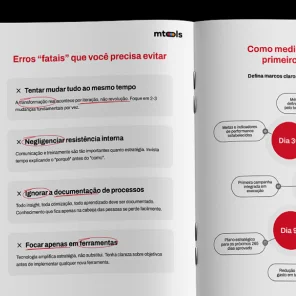 Support material · Whitepaper in PortugueseThe first 100 days as a marketing managerA roadmap from diagnosis to the first campaign, with the metrics the board understands.Download the whitepaper
Frequently asked questions
When should marketing planning 2027 start?
In October, before the budget meeting. The 2026 review takes a few weeks, and the leadership presentation needs to be ready when the year's budget is discussed.
How much budget should go to tests?
There is no single percentage. In our material on the first 100 days, the reference is splitting the budget into 70% for fast-return actions and 30% for long-term initiatives, with a fixed share for experimentation. Test budget needs to be in the plan from the start.
How do I defend brand budget in front of leadership?
With its own goal, measured by reach, frequency and branded search, tracked month by month next to the lead capture campaigns. Brand budget with a defined yardstick and timeline is much easier to defend.
What's the difference between a marketing plan and marketing planning?
Planning is the process: diagnosis, choices, budget and goals. The marketing plan is the document that comes out of it, with the calendar, the campaigns and the owners.